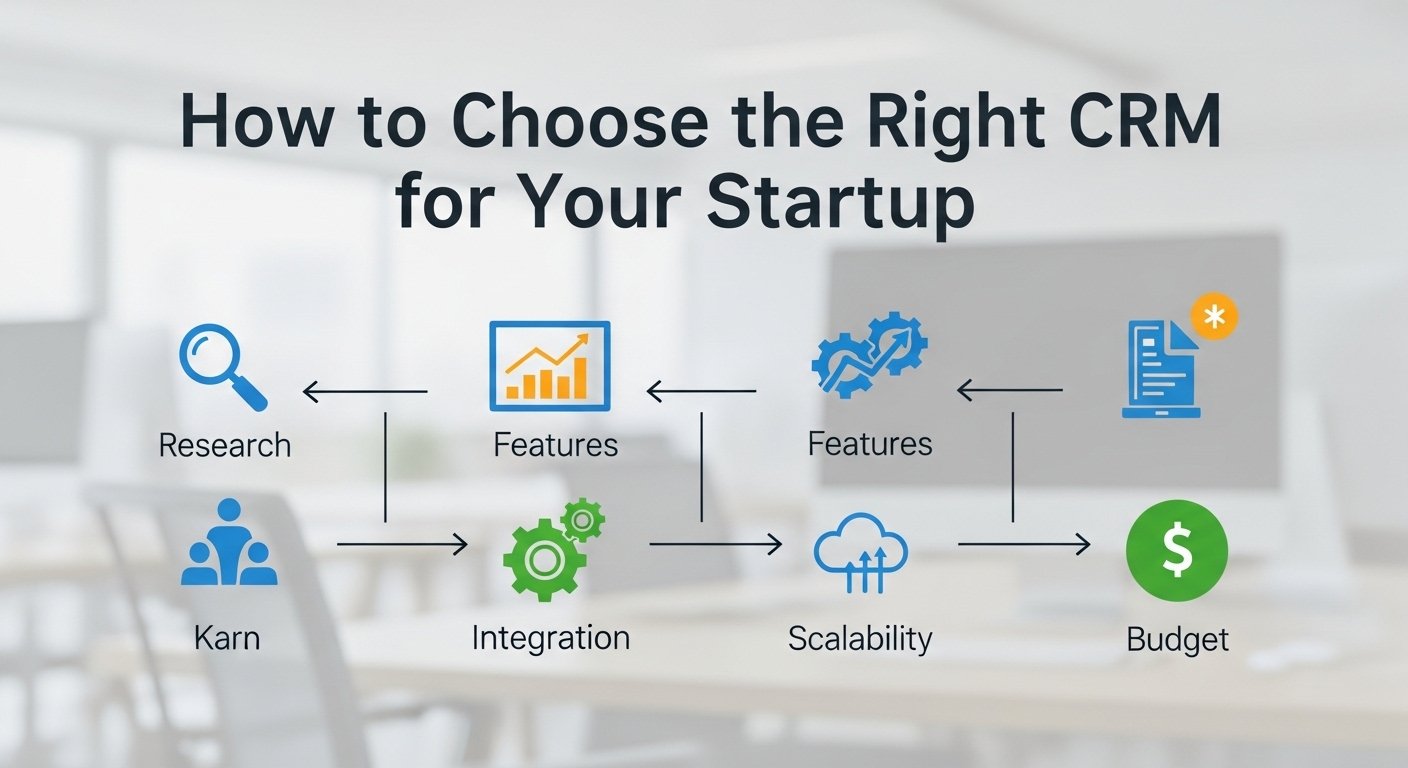
Starting a business is exciting, but keeping track of customers, leads, and sales can quickly become overwhelming. Spreadsheets only take you so far before things slip through the cracks. That is exactly when a CRM becomes your best friend.
Choosing the right CRM for your startup is not just about picking the most popular option. It is about finding a tool that fits your budget, scales with your growth, and actually gets used by your team. Too many startups invest in fancy software that sits unused because it was too complicated or too expensive for their stage.
This guide breaks down everything you need to know about selecting a CRM that works for early-stage companies. We will cover what features truly matter, how to avoid overspending, and which platforms deliver the best value for growing businesses. Let’s find your perfect match.
Key Takeaways
- Understand why startups need a CRM from day one.
- Learn which features are essential versus nice-to-have.
- Compare affordable CRM options designed for small teams.
- Discover how to evaluate scalability for future growth.
- Avoid common mistakes that waste time and money.
- Get a step-by-step framework for making the right choice.
Why Your Startup Needs a CRM from Day One
Many founders think they can wait until they have more customers before investing in a CRM. This is a costly mistake. By the time you realize you need one, you have already lost leads, forgotten follow-ups, and missed opportunities.
A CRM helps you build relationships systematically. Every interaction with a potential customer gets logged, tracked, and followed up on. This creates a foundation for sustainable growth that spreadsheets simply cannot match.
The Cost of Not Having a CRM
Without a CRM, your startup faces several hidden costs that add up quickly:
- Lost leads: Potential customers fall through the cracks without proper tracking.
- Duplicated efforts: Team members waste time contacting the same people.
- Poor handoffs: When team members leave, their knowledge walks out the door.
- Missed follow-ups: Deals die because nobody followed up at the right time.
The average startup loses 30% of potential revenue due to poor lead management. A CRM solves this problem by creating a single source of truth for all customer interactions.
When to Start Using a CRM
The short answer: as soon as you start talking to potential customers. Whether you have 10 contacts or 10,000, a CRM helps you manage those relationships effectively. Here are signs you need one right now:
- You are tracking customers in spreadsheets or notebooks
- Multiple team members contact the same lead without knowing
- You cannot remember the last time you followed up with a prospect
- Sales forecasting feels like guesswork
- Customer information lives in email threads and chat messages
Essential CRM Features for Startups
Not all CRM features are created equal. As a startup, you need to focus on the basics that deliver immediate value without overwhelming your team. Here is what actually matters at the early stage.
Contact Management
This is the foundation of any CRM. You need a central place to store customer information, communication history, and interaction notes. Look for a CRM that makes it easy to add contacts, log conversations, and search through your database.
Must-have contact features:
- Easy data import from spreadsheets and email
- Communication history tracking
- Custom fields for your specific business needs
- Quick search and filtering capabilities
Sales Pipeline Visualization
Seeing where every deal stands at a glance is crucial for startup sales. A visual pipeline helps you identify bottlenecks, prioritize follow-ups, and forecast revenue more accurately.
| Pipeline Stage | What It Means | Typical Actions |
|---|---|---|
| New Lead | Initial contact made | Qualify and assign |
| Qualified | Meets ideal customer profile | Schedule discovery call |
| Proposal | Sent pricing or proposal | Follow up and negotiate |
| Negotiation | Discussing terms | Address objections |
| Closed Won | Deal completed | Onboard customer |
Email Integration
Your CRM should connect seamlessly with your email. This eliminates the need to switch between platforms and ensures every email gets logged automatically. Two-way sync means emails sent from your CRM appear in your inbox and vice versa.
Basic Reporting
You do not need advanced analytics at the startup stage, but basic reporting is essential. Track metrics like leads generated, deals closed, and revenue by source. This data helps you make informed decisions about where to focus your efforts.
CRM Features You Can Skip (For Now)
Some features sound impressive but add complexity without proportional value for early-stage companies. Save these for later when your team and processes are more mature.
Advanced Automation
Complex workflow automation is powerful but requires significant setup time. At the startup stage, your processes are still evolving. What you automate today might need to change tomorrow. Start with simple automations like welcome emails and task reminders.
AI and Predictive Analytics
Machine learning features need large datasets to be effective. With a small customer base, AI recommendations will not be accurate enough to justify the extra cost. Wait until you have thousands of contacts before investing in these capabilities.
Custom Development
Highly customized CRMs require developer time and ongoing maintenance. As a startup, you need flexibility. Choose a CRM that works out of the box with minimal configuration. You can always customize later when you have more resources.
Top CRM Options for Startups
Now let us look at the specific platforms that deliver the best value for early-stage companies. Each has its strengths, and the right choice depends on your specific situation.
HubSpot CRM
Overview
HubSpot offers a genuinely free CRM that is surprisingly powerful. It includes contact management, deal tracking, email integration, and basic reporting without any cost. This makes it an excellent starting point for bootstrapped startups.
Pros
- Completely Free: No credit card required for the base CRM.
- Easy Setup: Get started in minutes without technical knowledge.
- Scalable: Upgrade to paid features as you grow.
- Great Integrations: Connects with hundreds of popular tools.
Cons
- Limited Customization: Free plan has restrictions on custom fields.
- HubSpot Branding: Free version includes HubSpot branding on forms.
- Feature Gating: Advanced features require expensive upgrades.
Best For
Bootstrapped startups and solo founders who need a free, reliable CRM to get started. HubSpot is perfect if you want room to grow without switching platforms later.
Zoho CRM
Overview
Zoho CRM provides excellent value with affordable pricing and a comprehensive feature set. It is part of the larger Zoho ecosystem, which includes tools for email, accounting, project management, and more.
Pros
- Affordable Pricing: Plans start at just $14 per user per month.
- Comprehensive Features: Includes automation, analytics, and AI assistance.
- Zoho Ecosystem: Integrates seamlessly with other Zoho apps.
- Mobile App: Full-featured app for managing sales on the go.
Cons
- Learning Curve: Interface can feel overwhelming at first.
- Support Quality: Customer support experiences vary.
- UI Design: Not as polished as some competitors.
Best For
Startups that want an affordable, feature-rich CRM and are willing to invest a little time learning the platform. Zoho is ideal if you plan to use other Zoho products.
Pipedrive
Overview
Pipedrive is built specifically for sales teams. Its visual pipeline interface makes it incredibly easy to see where every deal stands and what needs to happen next.
Pros
- Sales-Focused: Designed specifically for managing sales processes.
- Visual Pipeline: Intuitive drag-and-drop interface.
- Easy to Use: Minimal learning curve for new users.
- Activity Reminders: Never miss a follow-up again.
Cons
- Limited Marketing Features: Not ideal if you need marketing automation.
- No Free Plan: Only a 14-day trial is available.
- Reporting Limits: Advanced reports require higher-tier plans.
Best For
Sales-focused startups that want a simple, visual way to manage their pipeline. Pipedrive is perfect if your primary goal is closing more deals efficiently.
Freshsales
Overview
Freshsales by Freshworks combines CRM functionality with built-in phone and email. This all-in-one approach reduces the need for multiple tools and keeps everything in one place.
Pros
- Built-in Phone: Make and receive calls directly from the CRM.
- AI-Powered Insights: Freddy AI helps prioritize leads.
- Free Plan Available: Good starting point for small teams.
- User-Friendly: Clean, modern interface.
Cons
- Limited Integrations: Fewer third-party connections than competitors.
- Feature Complexity: Some features are buried in menus.
- Pricing Jumps: Significant price increase between tiers.
Best For
Startups that want built-in communication tools alongside their CRM. Freshsales is great if you make a lot of sales calls and want everything in one platform.
Comparison Table
| CRM | Starting Price | Free Plan | Best Feature | Ideal For |
|---|---|---|---|---|
| HubSpot | Free | Yes | Free forever plan | Bootstrapped startups |
| Zoho CRM | $14/user/mo | Yes (3 users) | Value for money | Budget-conscious teams |
| Pipedrive | $14/user/mo | No (14-day trial) | Visual pipeline | Sales-focused teams |
| Freshsales | Free | Yes | Built-in phone | Call-heavy sales |
How to Evaluate and Choose Your CRM
With so many options, making a final decision can feel paralyzing. Use this simple framework to cut through the noise and choose confidently.
Step 1: Define Your Must-Haves
List the three to five features your startup absolutely cannot function without. Be honest about what you need today versus what you think you might need someday. This prevents you from overpaying for features you will not use.
Step 2: Set Your Budget
Calculate how much you can afford per user per month. Remember to factor in growth. If you plan to hire five more people next year, calculate the cost at that level too. Some CRMs get expensive fast as you add users.
Step 3: Test Before Committing
Sign up for free trials and actually use the CRM for real work. Import some contacts, create a few deals, and send some emails. Pay attention to how intuitive the interface feels and whether your team would actually adopt it.
Step 4: Check Integration Options
Make sure the CRM connects with tools you already use. If you rely on Gmail, Slack, or QuickBooks, verify that integrations exist and work well. Poor integration means manual data entry, which defeats the purpose of having a CRM.
Common Mistakes to Avoid
Learning from others’ mistakes saves time and money. Here are the most common CRM selection errors startups make.
- Choosing based on brand name alone: The biggest CRM is not always the best fit for your specific needs.
- Ignoring user adoption: A CRM your team refuses to use is worthless, no matter how powerful it is.
- Overcomplicating setup: Start simple and add complexity gradually as your processes mature.
- Skipping training: Budget time and resources for proper onboarding and training.
- Not planning for growth: Choose a CRM that can scale with you for at least two to three years.
Conclusion
Choosing the right CRM for your startup is one of the most important early decisions you will make. The right platform helps you build stronger customer relationships, close more deals, and scale efficiently. The wrong one wastes money and frustrates your team.
Start with the basics. Focus on contact management, pipeline visibility, and ease of use. Do not get distracted by fancy features you do not need yet. And most importantly, actually use the CRM consistently. The best CRM in the world only works if your team embraces it.
Take advantage of free trials, test multiple options, and choose the one that feels right for your specific situation. Your future customers are waiting to be managed properly.
FAQ
What is the best free CRM for startups?
HubSpot CRM is widely considered the best free option for startups. It offers contact management, deal tracking, email integration, and basic reporting at no cost. The free plan has no time limit and supports unlimited users, making it ideal for bootstrapped startups that need to manage customer relationships without spending money upfront.
When should a startup invest in a paid CRM?
Consider upgrading to a paid CRM when you need advanced automation, more customization options, or better reporting capabilities. Most startups reach this point when they have between 500 and 1,000 contacts or a sales team of three or more people. At this stage, the productivity gains from paid features typically justify the investment.
How much should a startup budget for CRM software?
Startups should budget between $0 and $50 per user per month for CRM software. Free options like HubSpot work well for very early-stage companies. As you grow, expect to pay $14 to $30 per user per month for a solid mid-tier CRM. Calculate the cost at your projected team size in 12 months to avoid surprises.
Can I switch CRMs later if I choose the wrong one?
Yes, you can switch CRMs, but it involves migrating data, retraining your team, and rebuilding automations. Most platforms allow you to export contacts and deals as CSV files. To minimize disruption, choose carefully from the start and prioritize CRMs that offer easy data import and export functionality.
What CRM features do startups actually need?
Startups need contact management, sales pipeline visualization, email integration, and basic reporting. These core features help you track leads, manage deals, and measure progress without overwhelming complexity. Advanced features like AI analytics and complex automation can wait until your team and customer base grow larger.
How long does it take to implement a CRM for a startup?
Basic CRM implementation for a startup typically takes one to two weeks. This includes setting up the account, importing existing contacts, configuring your sales pipeline, and training your team. More complex setups with custom fields and integrations may take three to four weeks. Start simple and add complexity over time.